Pages of the Past: Ancient Leaf Books Displayed In Hanoi
Palm-leaf manuscripts are manuscripts made out of dried palm leaves. Their use began in South Asia and spread to other regions, as texts on dried and smoke-treated palm leaves of the Palmyra palm or the talipot palm. The practice continued until the 19th century when printing presses replaced hand-written manuscripts.
 |
| Photo: Tri Thuc va Cuoc Song |
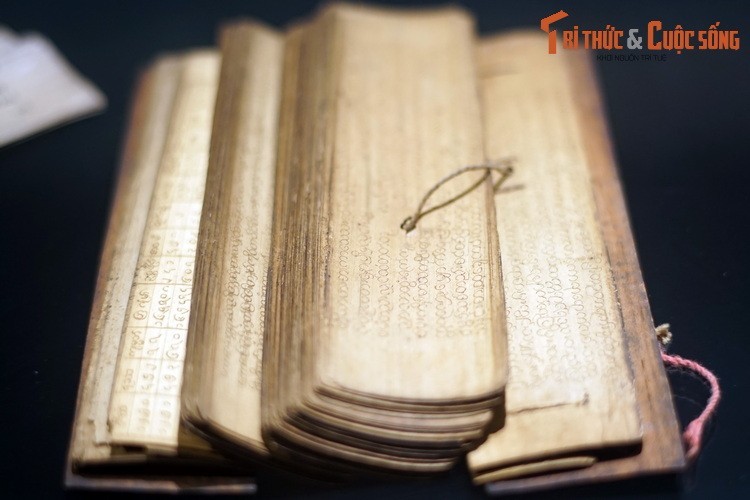
Vietnam Museum Of Ethnology in Hanoi is home to a unique collection of palm leaf books collected from Laos, Myanmar, and Indonesia. This is a unique way of storing texts, dating back to the 5th century BC in the Indian subcontinent, then spreading to Southeast Asia.
 |
| Photo: Tri Thuc & Cuoc Song |
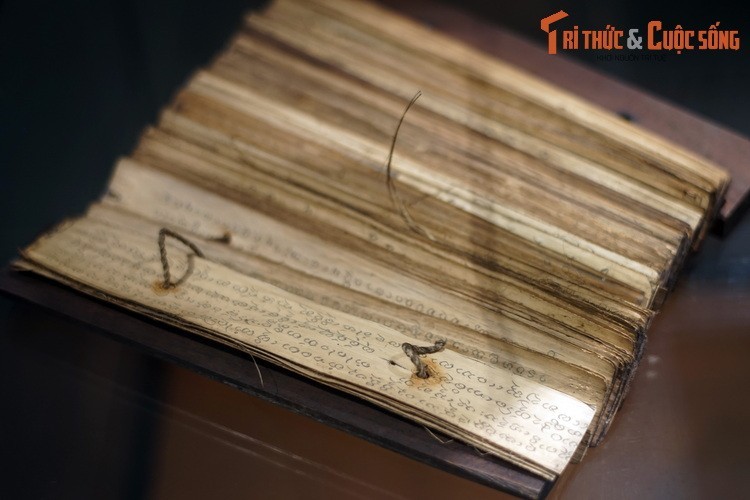
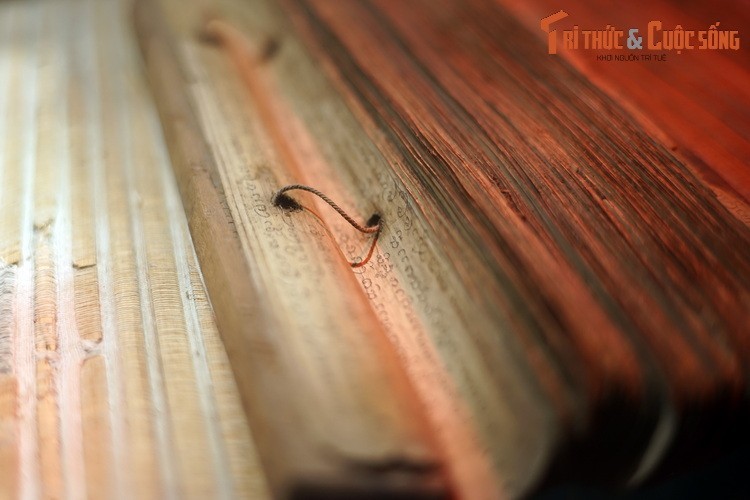
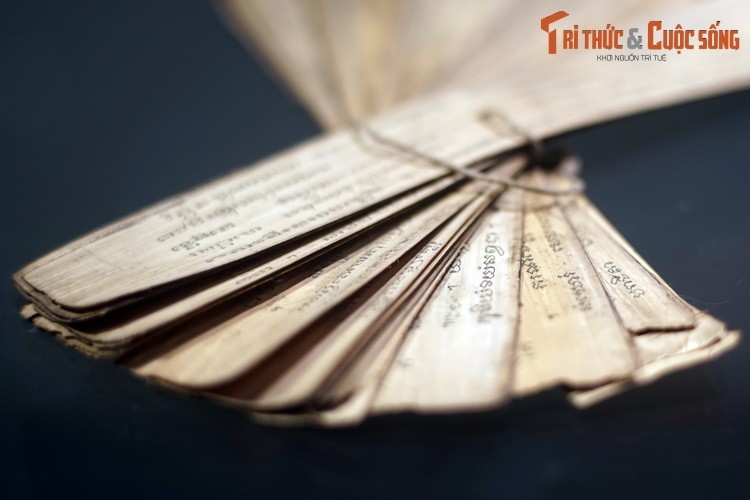
The text in palm leaf manuscripts was inscribed with a knife pen on rectangular cut and cured palm leaf sheets; colorings were then applied to the surface and wiped off, leaving the ink in the incised grooves. Each sheet typically had a hole through which a string could pass, and with these, the sheets were tied together with a string to bind like a book.
When reading, one turns over each leaf, similar to reading a normal book. The contents of the palm leaf books include manuscripts on Hindu philosophy, poetry, grammar, and other topics.
 |
| Photo: Tri Thuc & Cuoc Song |
A palm leaf text thus created would typically last between a few decades and about 600 years before it decayed due to dampness, insect activity, mold, and fragility. Thus the document had to be copied onto new sets of dried palm leaves.
Hindu temples often served as centers of learning, where ancient palm leaf manuscripts were used for study, and where the texts were copied when they were old.
 |
| Photo: Tri Thuc & Cuoc Song |
The oldest palm leaf books have been found in regions with cold, dry climates, usually in the high mountain regions of India, Nepal, Tibet, and Central Asia. Many of these manuscripts date back more than 1,000 years.
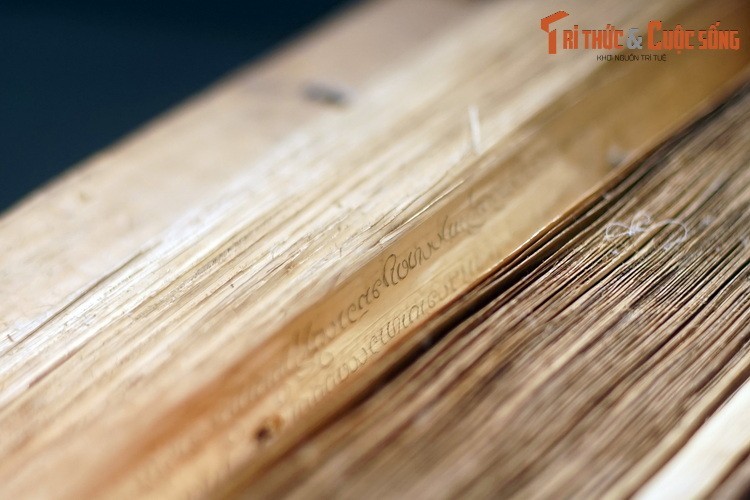
The round and cursive design of the letters of many South Indian and Southeast Asian scripts, such as Devanagari, Nandinagari, Kannada, Telugu, Lontara, Javanese, Balinese, Odia, Burmese, Tamil, Khmer, and so forth, may be an adaptation to the use of palm leaves, as angular letters could tear the leaves apart.
 |
| Photo: Tri Thuc & Cuoc Song |
With the advent of the printing press and the conquest of the West in the early 19th century, the prosperous era of palm leaf books came to an end. The palm leaf book collection of the Vietnam Museum of Ethnology dates to the early 20th century, belonging to the group of the last palm-leaf books written.
Today, palm leaf books are recognized as a precious heritage in the treasure of human civilization. Many governments in the region are working to preserve the special manuscripts that the ancients left for posterity on palm leaves.
The post Pages of the Past: Ancient Leaf Books Displayed In Hanoi appeared first on Vietexplorer.com.
View more from VietExplorer:
Hanoi among the best places for photographySamsung New Folding Phones: Special Features, Preorder Instruction & More
Danang covers tuition fees of students for 2021-2022 school year
Branding a key to raise Ho Chi Minh City’s global position
Dak Nong’s Town of Golden Flowers
HCM City calls on people to “stay where they are” as COVID-19 surges
Exhibition honours Vietnam’s legendary general
HCM City to vaccinate foreigners against COVID-19
Vietnamese Folk Song Goes Viral on Chinese Social Network – Video
Digital library preserves common heritage of Vietnam and France
Vietnam’s aerospace sector to launch new satellite
Coach Park Hang-seo rejoins Vietnam national football team after quarantine time
Olympics-Soccer-Richarlison hits hat-trick as Brazil beat Germany
Documentary by Vietnamese-origin director nominated for Emmy Awards
Vietnamese in Top 25 Spoken Languages in the World
First international art photo contest to be held in Ho Chi Minh City
A day for filial piety: the Vu Lan Festival
Expat Sprays Water to Disperse Crowds Amid Social Distancing
MoCST: VFI should pay attention to copyright issues in disseminating Vietnamese movies on YouTube
Ho Chi Minh City: ‘Silicon Valley of Asia’


Nhận xét
Đăng nhận xét